How to Choose the Right Controller for Your Material Testing Machine

Material testing machines require precise and reliable control systems to ensure accurate force, displacement, strain, and other measurements. Selecting the right controller is essential for achieving repeatability, compliance with testing standards, and smooth automation. With multiple options available, from modular platforms like NI cRIO to specialized controllers like DOLI and MTS, choosing the right solution depends on factors such as machine type, flexibility required, real-time control capabilities, and integration with sensors and actuators.

In this post, we’ll compare several controllers used in material testing applications: ADMET, Beckhoff, B&R, Moog, MTS, NI sbRIO/cRIO, TACTUN, and Zwick/Roell – DOLI, highlighting their strengths, limitations, and best-use scenarios.

Key Factors to Consider When Choosing a Controller

Before selecting a controller for your material testing machine, it is essential to evaluate key factors that determine its suitability for your specific application. A controller in a material testing machine typically serves as both the data acquisition (DAQ) and control system, managing test execution while simultaneously recording sensor data. Choosing the right system ensures precise, repeatable, and compliant test results while also allowing for flexibility in automation and integration.

Key considerations include:

  • Real-Time Control & Performance – The controller must provide deterministic, low-latency closed-loop control for precise force, displacement, or strain regulation. Evaluate the achievable control frequency and loop rate based on your actuator type (servo-electric, servo-hydraulic, etc.). A stable real-time environment ensures repeatable test results across all your machine models.
  • System Architecture & Scalability – A good controller should allow you to build a scalable product line rather than one-off machines. Consider whether the platform supports multiple I/O configurations, modular extensions, or software reusability across your models. Scalable architecture reduces R&D cost for future machine variants.
  • I/O Density and Sensor Interfaces – Machine builders often integrate multiple load cells, extensometers, and environmental sensors. Check that the controller offers sufficient analog and digital I/O channels with high-resolution ADCs and built-in signal conditioning options (e.g., strain gauge, LVDT, encoder). This minimizes external boards and simplifies wiring.
  • Software Environment & Development Workflow – The programming model defines your engineering effort and update speed. Decide whether you want a low-code or graphical environment (for faster prototyping) or a fully programmable platform (for deep customization). Also assess version control, debugging, and simulation tools for in-house development.
  • Integration & Time to Market – Controllers vary in integration complexity. Some require extensive software and electrical engineering, while others come with pre-built libraries for common test functions (PID control, ramp profiles, data logging). Evaluate how quickly your team can integrate the system into a new machine and start production.
  • Compliance and Calibration Frameworks – Machine builders must ensure that their machines can be calibrated and validated according to ASTM, ISO, and EN standards. The controller should provide calibration routines, traceable data acquisition, and the ability to document compliance for end-customers.
  • Cost of Ownership & Supply Chain Stability – Beyond unit price, consider engineering time, firmware maintenance, and vendor dependency. A stable controller partner with long-term component availability ensures continuity of your machine production.

Understanding these factors will help determine whether a programmable modular platform like NI sbRIO/cRIO or a dedicated testing controller like DOLI or MTS is the right fit for a specific application. In the following sections, we compare eight leading controller solutions used in material testing

Note, next sections are ordered alphabetically.
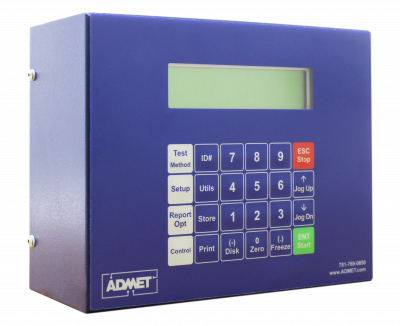
1. ADMET – Reliable Testing for Retrofit and New Machines

Best for:

  • Retrofitting existing testing machines
  • ASTM-compliant force and displacement control

Overview:

ADMET controllers are designed for both electromechanical and servo-electric testing machines, making them a great choice for upgrading old systems. Their software provides standardized test procedures and reporting.

Strengths:

✔ Turnkey solutions for testing labs
✔ Supports ASTM-compliant testing
✔ Good balance between automation and ease of use

Limitations:

✖ Less flexibility for R&D applications
✖ Limited and fixed software functionality
✖ Limited modularity compared to NI cRIO

Admet Controller
Beckhoff

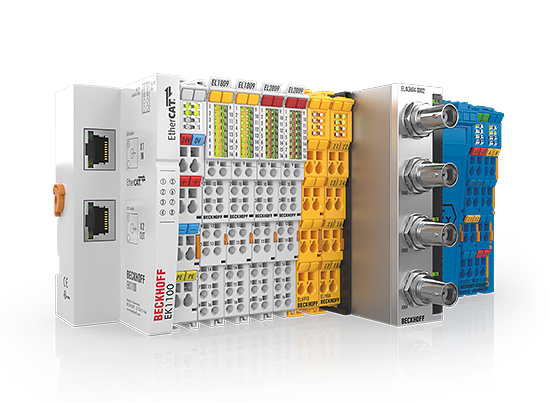
2. Beckhoff – PC-Based Automation for Material Testing

Best for:

  • High-speed, synchronized testing applications
  • Integration with industrial automation environments

Overview:

Beckhoff controllers use PC-based control with TwinCAT software, making them an excellent option for high-speed, multi-axis material testing. Unlike traditional controllers, Beckhoff offers real-time EtherCAT communication, improving test repeatability and data synchronization.

Strengths:

✔ PC-based automation with real-time control
✔ High-speed EtherCAT communication
✔ Scalable for large test setups

Limitations:

✖ Requires TwinCAT programming expertise
✖ Less standardized material testing support

3. B&R – Integrated Automation for Precision Testing

Best for:

  • Multi-axis test systems
  • Integration with factory automation
  • Long-term scalability

Overview:

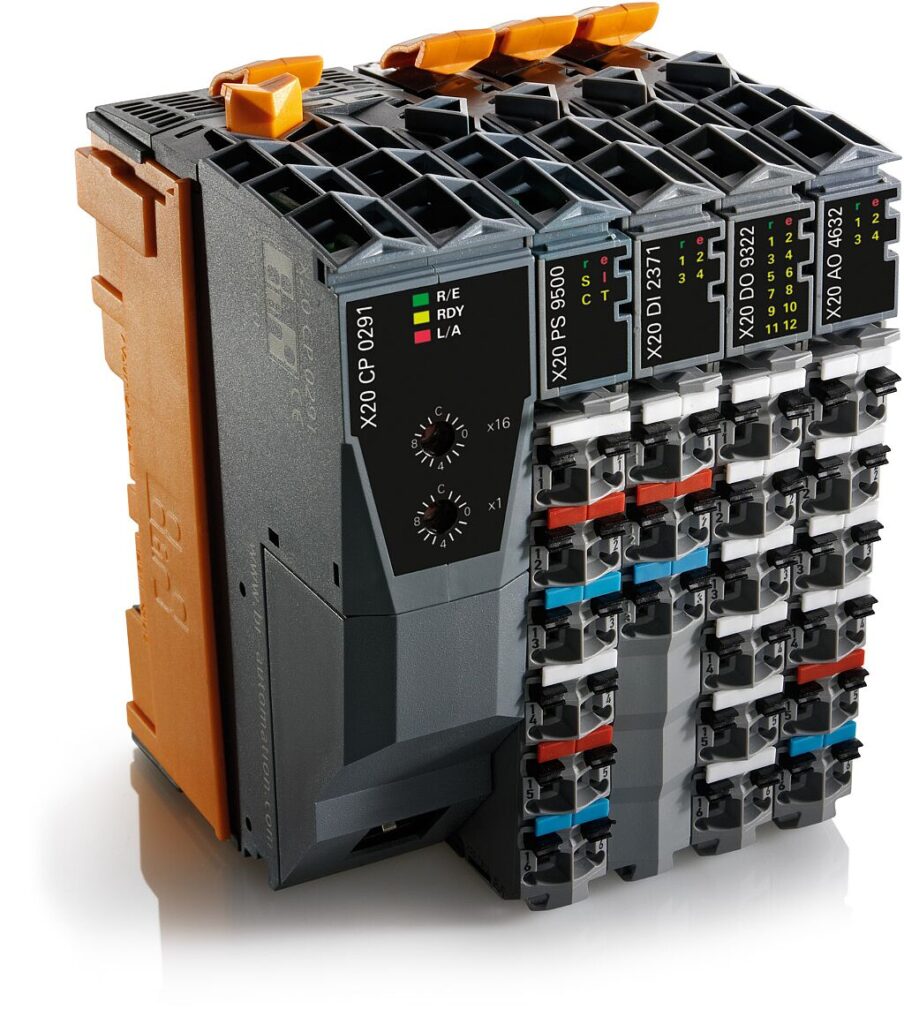
B&R (Bernecker + Rainer), now part of ABB, offers advanced automation solutions based on its Automation Studio environment and Powerlink real-time communication. B&R controllers combine motion control, PLC, safety, and visualization in one platform. Their systems are used in both industrial and testing applications where high synchronization and flexibility are required.

Strengths:

✔ Integrated motion and PLC control in one environment
✔ EtherCAT real-time communication
✔ Modular hardware scalable for multiple test channels
✔ Strong integration with industrial automation networks

Limitations:

✖ Requires specialized Automation Studio knowledge
✖ Longer configuration time for custom test setups

4. Moog – High-Performance Servo-Hydraulic Test Systems

Best for:

  • Fatigue and dynamic material testing
  • Servo-hydraulic test rigs

Overview:

Moog provides high-end servo controllers designed for dynamic and fatigue testing applications. These controllers offer high-speed closed-loop control and are commonly used in aerospace and automotive structural testing.

Strengths:

✔ Industry-leading dynamic control
✔ High-bandwidth force and displacement control
✔ Designed for long-life fatigue testing

Limitations:

✖ Expensive for small-scale applications
✖ Requires specialized integration

5. MTS – Advanced Testing for Aerospace and Automotive

Best for:

  • Complex mechanical and environmental testing
  • High-load and high-strain applications

Overview:

MTS controllers are widely used in automotive crash testing, aerospace stress analysis, and structural testing. Their software provides full compliance with international testing standards.

Strengths:

✔ Advanced servo-hydraulic control
✔ Highly accurate multi-axis testing
✔ Full ASTM/ISO compliance

Limitations:

✖ High cost
✖ Best suited for large-scale test systems

MTS Flextest Controllers

6. NI sbRIO & NI cRIO – Modular and Programmable for Custom Test Setups

Best for:

  • Custom and research-based material testing machines
  • Applications requiring flexible programming and modular DAQ and control integration

Overview:

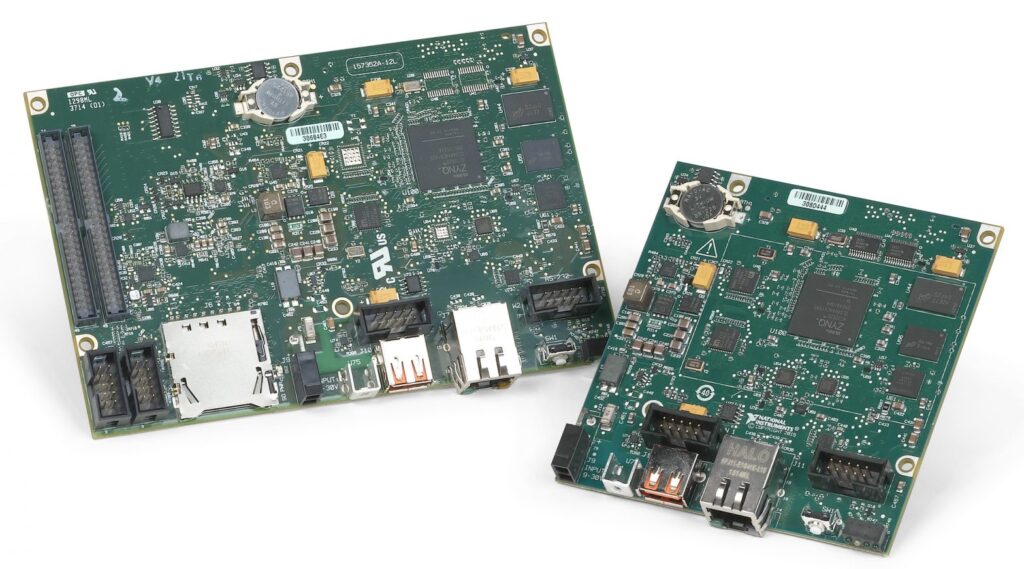
National Instruments (now part of Emerson) offers two major platforms: sbRIO (Single-Board RIO) and cRIO (Compact RIO), both designed for high-performance real-time control and data acquisition. These controllers are highly customizable and work seamlessly with LabVIEW, making them popular in R&D environments and custom-built test rigs.

  • NI sbRIO: A compact, embedded controller with integrated I/O, ideal for space-constrained applications.
  • NI cRIO: A modular platform with interchangeable I/O modules, perfect for complex, multi-sensor test setups.

Strengths:

✔ Real-time deterministic control
✔ Seamless DAQ integration with NI DAQ cards
✔ Highly programmable with LabVIEW
✔ Modular and expandable for multiple sensor types

Limitations:

✖ Requires LabVIEW expertise
✖ Long development cycle
✖ Higher learning curve for custom applications

7. TACTUN – No-Code Controller and Software Platform for Machinery Builders

Best for:

  • Custom machine manufacturers
  • Static, dynamic, and fatigue material testing
  • OEMs needing full control branding

Overview:

TACTUN provides a no-code controller platform combining custom single-board controllers with a cloud-based software builder. Each controller is tailored to the customer’s hardware I/O and comes ready for closed-loop control of any supported sensors.  The controller’s loop close-loop control rate achieving 100kHz provides precise and fast controller possibility.  The platform allows manufacturers to generate their own, white-labeled desktop applications without coding, enabling rapid development of testing and automation software.

Strengths:

✔ Fully custom single-board design
✔ Integrated no-code software and hardware ecosystem
✔ Real-time control for static, dynamic, and fatigue testing
✔ Enables machine builders to generate branded software apps
✔ Reduces development lead time and cost dramatically

Limitations:

✖ Newer platform still expanding standardized calculation libraries
✖ Offers limited flexibility compared to programmable systems

TACTUN Controller

8. Zwick/Roell – DOLI – High-Precision Control for Material Testing Machines

Best for:

  • Universal testing machines (UTMs) and electromechanical test setups
  • Standardized mechanical testing applications

Overview:

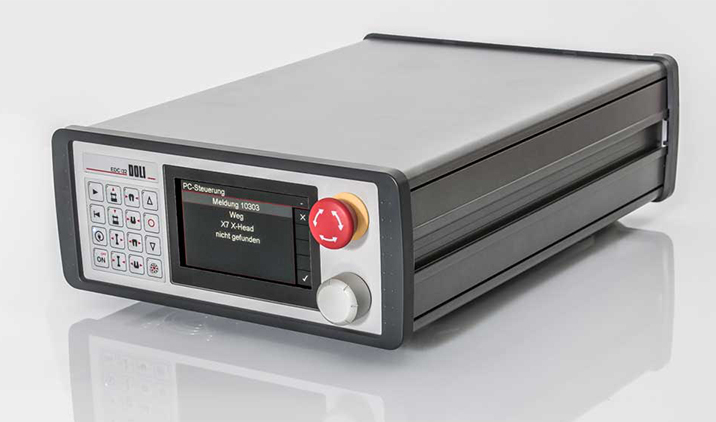
Zwick/Roell – DOLI specializes in servo-controlled material testing systems, offering high-accuracy force, displacement, and strain control. It is widely used in tensile, compression, and fatigue testing machines.

Strengths:

✔ Preconfigured for material testing
✔ Precise closed-loop control
✔ Compliant with ASTM and ISO standards

Limitations:

✖ Less flexibility for custom automation
✖ Limited third-party software integration

Conclusion

Choosing the right controller for a material testing machine is crucial for achieving precise, repeatable, and compliant test results. Whether it’s high-speed control, standardized compliance, or flexibility in programming, each controller offers unique advantages. Understanding real-time control, DAQ integration, and application needs will help you select the best fit for your testing environment.

Share this post: