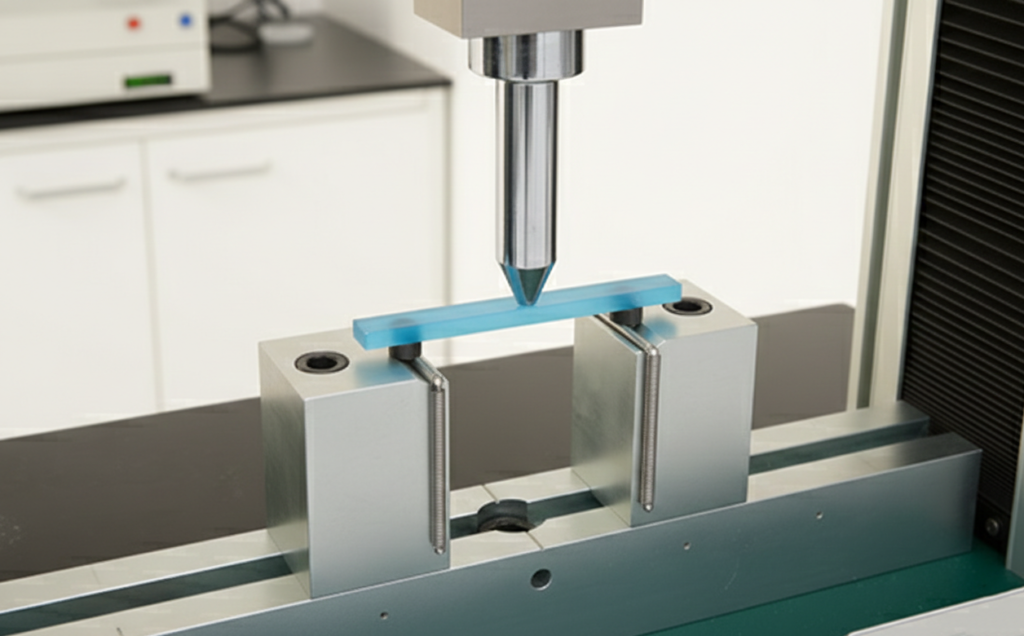
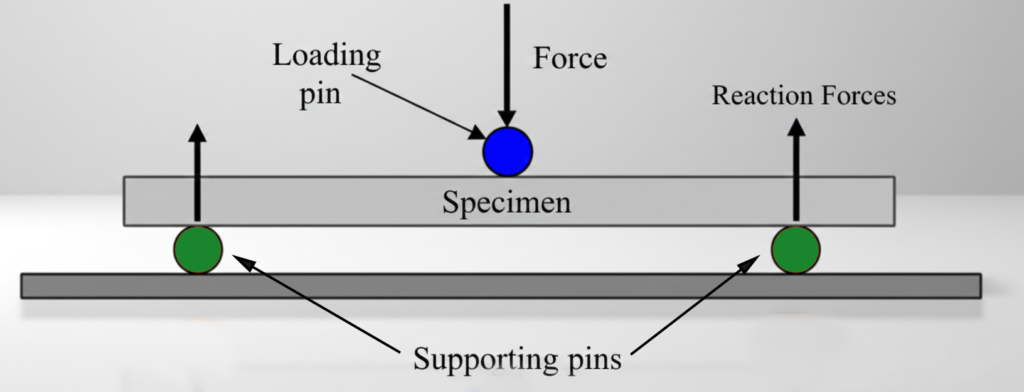
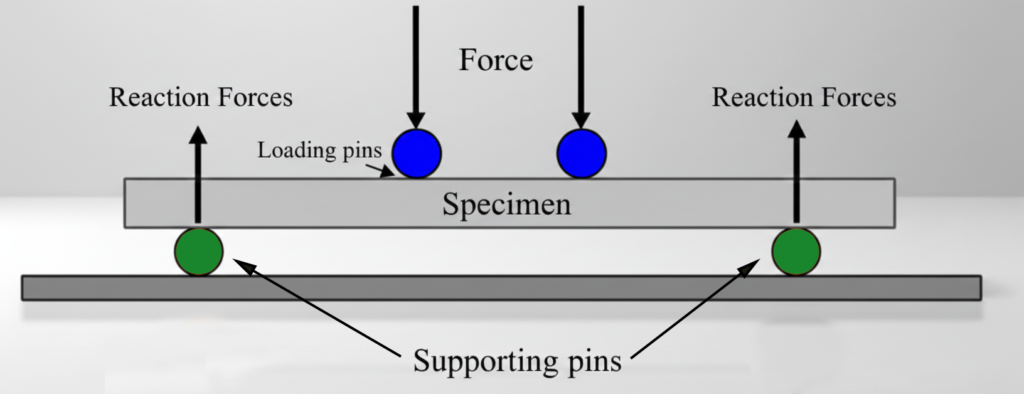
Bending tests are among the most widely used mechanical tests in materials and structural evaluation. The basic idea is straightforward: a specimen is supported at two points, a load is applied, and the resulting force–deflection response is used to calculate flexural strength and stiffness.
Despite this apparent simplicity, the way the load is applied has a significant impact on stress distribution, failure behavior, and the meaning of the measured values. The most common approaches, three-point and four-point bending, are often treated as interchangeable. In reality, they answer subtly different questions about material behavior.