The Startups Pushing the Shift Forward
This transition is being driven less by incumbents and more by startups willing to rethink the workflow from first principles.
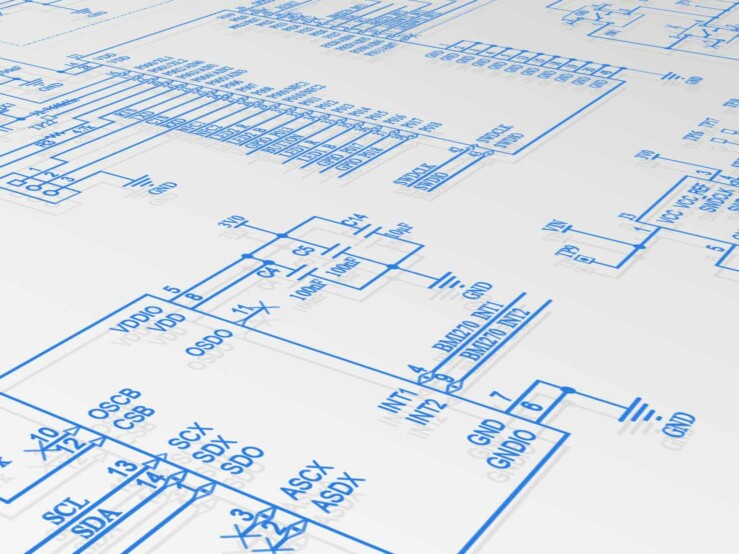
Pinscope — Teaching Software to Review Like an Engineer
Pinscope doesn’t try to design boards for you. Instead, it focuses on something far more practical: preventing mistakes before they become expensive.
By analyzing schematics against datasheets and design rules, Pinscope:
- identifies hidden risks
- flags violations early
- reduces dependence on late-stage reviews
It mirrors how senior engineers scan designs — but does it continuously and at scale.
Diode Computers — Treating PCBs as Generated Artifacts
Diode challenges a core assumption: that PCBs must be manually drawn at all.
Their approach treats PCB design as a code-driven process, where structured descriptions and constraints are translated into schematics and layouts. AI assists by:
- generating boards from specifications
- detecting logical and electrical errors
- exporting results to standard EDA tools
This blurs the boundary between hardware and software—and makes iteration dramatically faster.
quilter — Letting Physics Guide Automation
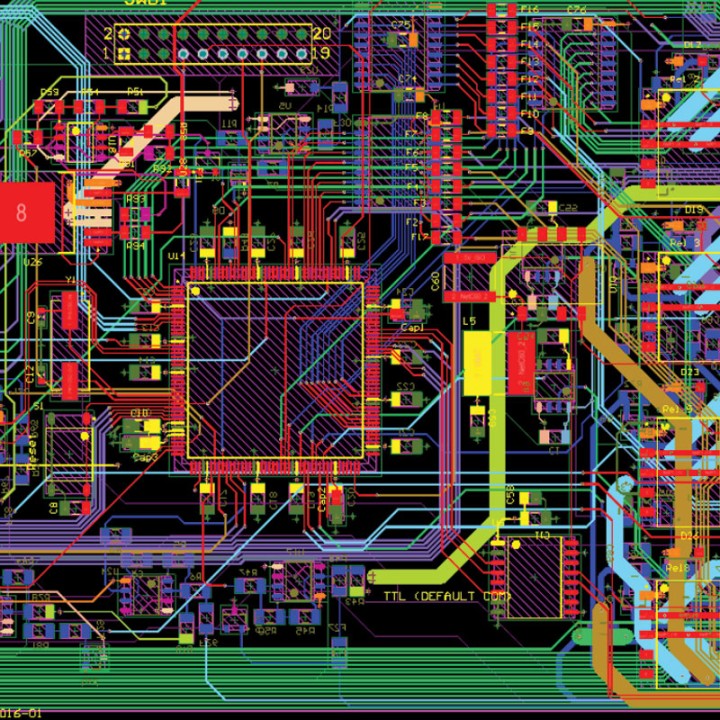
Quilter goes straight at the hardest problem: fully autonomous PCB layout that respects real-world physics.
Given a schematic and constraints, Quilter:
- generates complete board layouts
- evaluates signal integrity and manufacturability
- produces multiple design options in hours
The engineer’s job shifts from routing traces to choosing the best tradeoff.
That change alone reshapes timelines and team structure.
A Broader Pattern Emerges
These companies differ in approach, but they share a common belief:
PCB design does not need to be as manual as we’ve made it.
Other teams are reinforcing this idea:
- CircuitMind accelerates early schematic and BoM creation
- Flux embeds AI assistance directly into browser-based EDA tools
- DeepPCB applies reinforcement learning to routing decisions
- JITX treats boards as programmatically generated systems
Each attacks a different pain point, but all move design up the abstraction stack.